

Artificial intelligence is changing our lives and work in big ways. It’s behind virtual assistants and self-driving cars. These systems show amazing skills that were once only in movies.
Two main ways to use AI are deep learning and reinforcement learning. Deep learning uses neural networks to spot patterns. Reinforcement learning helps make decisions by trying different things.
Knowing the difference between these methods is very important for those using AI. It affects how long it takes to develop something and how it works in real life.
This look into both methods will show how they work and their strengths. Companies using AI can make better choices about their strategies.
Understanding Artificial Intelligence and Its Subfields
Artificial intelligence is a major technological leap, making machines think like humans. It’s about creating systems that can solve problems and spot patterns like we do. This field is all about making machines smarter.
What is Artificial Intelligence?
Artificial intelligence, or AI, is about making machines smart like us. These machines can learn, think, and even make choices based on data. AI is split into three main types, each with its own level of smarts:
- Artificial Narrow Intelligence (ANI): These are machines that do one thing really well, like recognising faces or translating languages.
- Artificial General Intelligence (AGI): These are the dream machines that can do anything a human can, across many areas.
- Artificial Super Intelligence (ASI): These are the super-smart machines that are way smarter than us in almost everything.
Most AI we use today is ANI. These machines are great at specific tasks but can’t solve general problems. They’re in our daily lives, from virtual assistants to what shows we watch.
Branches of Machine Learning
Machine learning is a key part of AI, focusing on systems that get better with practice. It lets computers learn from data without being told how to do it. There are three main ways it works:
| Learning Type | Description | Common Applications |
|---|---|---|
| Supervised Learning | Uses labelled data to train algorithms for prediction or classification | Spam detection, image recognition |
| Unsupervised Learning | Finds patterns in unlabelled data through clustering and association | Customer segmentation, anomaly detection |
| Reinforcement Learning | Trains algorithms through reward-based systems and trial-and-error | Game AI, robotic control systems |
Deep learning is a special part of machine learning that uses complex neural networks explained. These networks have many layers that help machines learn complex things. They’re great for tasks like understanding speech and driving cars on their own.
The AI world is structured like a pyramid. AI is at the top, with machine learning and deep learning below. This structure helps us make smarter machines that change the world. Knowing these basics is key to diving deeper into AI.
What is Deep Learning?
Deep learning is a big step forward in artificial intelligence. It lets computers learn from raw data, just like we do. This is thanks to its layered neural architecture.

Definition and Core Concepts
Deep learning is a part of machine learning that uses many layers of artificial neural networks. These networks learn from data on their own. They are designed to work like our brains, recognising patterns and making decisions with little help from us.
Deep learning works by processing information in layers. Each layer makes the data more complex. This way, deep learning models can tackle tasks that were too hard before.
“Deep learning automates much of the feature extraction process, eliminating some of the manual human intervention required and enabling the use of larger datasets.”
Backpropagation is key to these systems. It helps the model adjust its parameters to improve its predictions. This process keeps going until the model does its best on the task.
Common Architectures and Techniques
There are many deep learning architectures for different tasks. Each one is good at something specific, like images or language.
Convolutional Neural Networks (CNNs) are great for images. They can classify images, detect objects, and even recognise faces. CNNs learn from images in a way that’s unique to them.
Recurrent Neural Networks (RNNs) are good with sequences. They remember what came before, making them perfect for speech, language, and time series analysis. This is because they keep track of the sequence’s history.
Transformer architectures are the latest in deep learning for language. They use self-attention to focus on the right parts of the data. This makes them top-notch for translation, summarising, and answering questions.
| Architecture | Primary Application | Key Strength | Example Use Case |
|---|---|---|---|
| Convolutional Neural Networks (CNNs) | Image Processing | Spatial feature extraction | Medical imaging analysis |
| Recurrent Neural Networks (RNNs) | Sequential Data | Temporal pattern recognition | Voice assistant technology |
| Transformers | Natural Language Processing | Context understanding | Real-time translation services |
Deep learning is versatile, used in many areas. It’s often linked with supervised learning but can also be used in other ways. This makes it interesting to compare with supervised learning vs reinforcement learning.
The strength of deep learning is its ability to grow with data and computing power. As both increase, deep learning models solve more complex problems.
What is Reinforcement Learning?
Deep learning is great at finding patterns in data. But reinforcement learning is different. It’s about making decisions by trying things out, not just by looking at data.
It works like we learn to ride a bike. The system tries different actions and gets feedback. It then changes its plan to get more rewards over time.
Definition and Fundamental Principles
Reinforcement learning has an agent and an environment. The agent takes actions and gets feedback from the environment. Its goal is to find the best way to get rewards in the long run.
The main parts are:
- Agent: The one that makes decisions and learns
- Environment: The place where the agent acts
- Actions: The things the agent can do
- Rewards: The feedback the agent gets
- Policy: The plan for what to do in each situation
This setup helps solve complex problems. It’s like how animals learn from rewards and punishments.
Key Algorithms and Methods
Many algorithms are good at reinforcement learning. They balance trying new things with doing what works well.
Q-Learning is a basic but powerful method. It learns how good actions are in certain situations. It uses a Q-table to keep track of expected rewards.
Policy Gradient Methods focus on improving the decision-making plan. They’re good for situations where there are many possible actions.
Deep Q-Networks (DQN) mix Q-learning with neural networks. This breakthrough helped tackle big challenges like playing video games. DQN uses tricks like experience replay to train better.
| Algorithm | Type | Key Feature | Notable Application |
|---|---|---|---|
| Q-Learning | Value-based | Model-free, off-policy | Simple grid worlds |
| Policy Gradients | Policy-based | Direct policy optimisation | Robotic control |
| Deep Q-Networks | Hybrid | Neural network function approximation | Atari game playing |
| Proximal Policy Optimization | Policy-based | Stable policy updates | Complex game environments |
AlphaGo showed how powerful reinforcement learning can be. It used neural networks and other techniques to beat Go champions. This shows how it can solve very hard problems by making smart decisions.
These algorithms keep getting better. They’re making systems that can learn and adapt in many areas. Reinforcement learning is a key area for creating smarter, more adaptable systems.
What is the Difference Between Deep Learning and Reinforcement Learning?
Deep learning and reinforcement learning are both part of artificial intelligence. But they tackle problems in different ways. Knowing their differences helps us choose the right tool for the job.
Learning Approach and Objectives
Deep learning looks for patterns in static data. It’s great at tasks like recognizing images and understanding speech. Its goal is to predict based on past data.
Reinforcement learning, on the other hand, learns by trying and getting feedback. It gets rewards or penalties for its actions. This method aims to find the best way to make decisions through feedback.

As explained in this detailed article, deep learning works well with clear data. Reinforcement learning is better for changing environments that need ongoing decisions.
Data Requirements and Processing
Deep learning needs lots of labelled data to work well. The quality and amount of data affect its performance. It trains on batches of data.
Reinforcement learning, by contrast, learns from experience. It deals with data as it comes, updating its strategies based on feedback. It doesn’t need as much data upfront but needs more interaction with its environment.
The table below shows how they handle data differently:
| Aspect | Deep Learning | Reinforcement Learning |
|---|---|---|
| Data Type | Static, labelled datasets | Dynamic experience streams |
| Processing Method | Batch processing | Real-time sequential processing |
| Learning Trigger | Pre-collected data | Environmental feedback |
Deep reinforcement learning combines the strengths of both. It uses deep learning for pattern recognition and reinforcement learning for decision-making. This hybrid approach is effective in complex, changing environments.
Applications and Use Cases
These AI methods are making a big difference in many areas. They help in healthcare and in making cars drive by themselves. They have moved from just being ideas to being used in real life, solving big problems.
Deep Learning in Practice
Deep learning is changing how we look at medical images. It can spot tumours and other issues in scans, often better than doctors. It looks at patterns in images that people might miss.
In talking to machines, deep learning is a game-changer. It makes chatbots and translators understand us better. These systems get better at understanding what we mean, bit by bit.
Computer vision is used in many ways, like in facial recognition. It makes things safer and more personal. Self-driving cars also use it to understand their surroundings.
Businesses use deep learning to guess what customers will want. They use it to manage stock and suggest things to buy. Banks use it to spot fraud and figure out risks.
Reinforcement Learning in Action
Reinforcement learning has won big in games. AlphaGo beat a world champion, showing it’s smart. OpenAI Five showed it can learn to play team games too.
In robotics, it helps machines learn to move and do tasks. They figure out how to get around and handle things by trying things. This way, they can learn without being told exactly what to do.
It’s also used in trading to make smart choices. These systems learn from data and adapt to changes. They’re better at making money than old ways.
Autonomous systems use it to make decisions quickly. It helps them pick the best action in changing situations. This is really useful when things are always changing.
The mix of deep learning and reinforcement learning is called deep reinforcement learning. It’s a big step forward in AI. It’s all about finding patterns and making smart choices.
Advantages and Limitations
Deep learning and reinforcement learning are both key in artificial intelligence. They have their own strengths and weaknesses. Knowing these helps developers pick the best method for their tasks.
Strengths of Deep Learning
Deep learning is great at finding patterns in big data. Its design lets it find important features on its own.
Its main benefits are:
- It does well in tasks like image and speech recognition.
- It gets better as the data grows.
- It can handle complex data well.
This tech has changed fields like computer vision and natural language processing. Its skill in finding patterns is very useful for tasks that need to see and understand.
Challenges of Deep Learning
Deep learning has had big wins, but it also faces big challenges. These can make it hard to use in real life.
The main issues are:
- It needs a lot of data to work well.
- It uses a lot of computer power, both when training and using.
- It’s hard to understand how it makes decisions.
- It can be tricked by fake data.
Because deep learning is like a “black box,” it’s hard to know why it makes certain choices. This can be a problem in important situations.
Benefits of Reinforcement Learning
Reinforcement learning is great for making decisions over time. It learns by trying things and getting feedback. This makes it good for changing situations.
Its main advantages are:
- It adapts well to new situations.
- It focuses on long-term goals, not just quick wins.
- It’s good at solving complex problems, like playing games and managing resources.
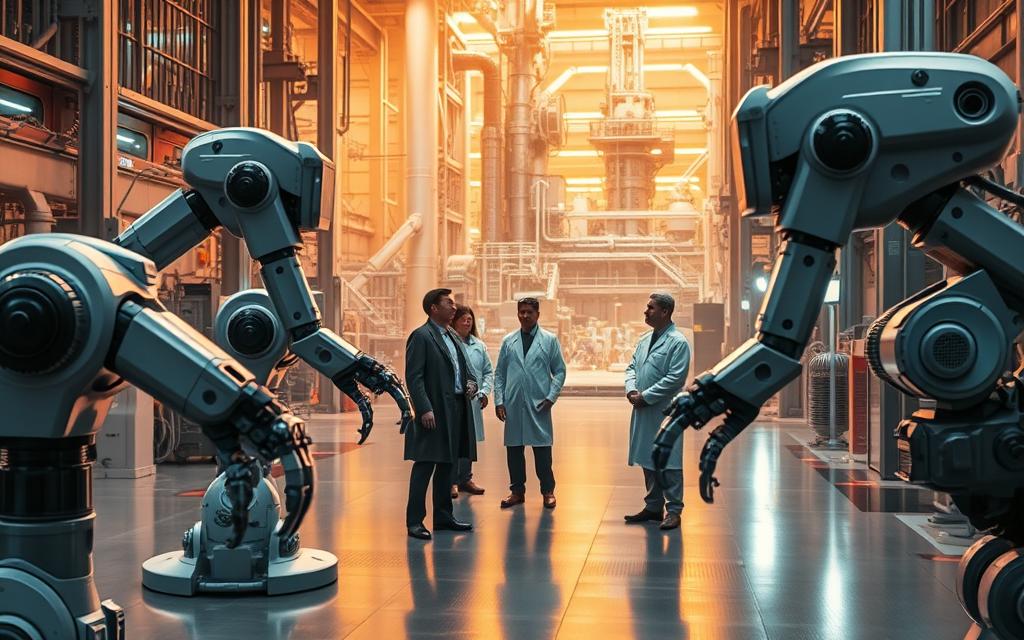
This makes reinforcement learning very useful for AI in robotics. Robots can learn the best ways to act by trying things in a simulated world.
Drawbacks of Reinforcement Learning
Reinforcement learning has its own set of challenges. These can make it hard to use in many situations. Solving these problems often takes a lot of work.
The main problems are:
- It takes a long time to train because it learns slowly.
- It’s hard to figure out the right rewards for learning.
- It’s hard to move learning from a simulated world to real life.
- It needs a lot of computer power, more than most deep learning systems.
The table below shows the main good and bad points of both methods:
| Aspect | Deep Learning | Reinforcement Learning |
|---|---|---|
| Data Efficiency | Needs lots of labelled data | Learns from rewards |
| Computational Needs | High during training | Extremely high during learning |
| Decision Transparency | Hard to understand | Decisions are clear |
| Real-world Deployment | Easy to use | Hard to move to real life |
| Adaptability | Best for static environments | Best for changing environments |
Each method is good for different tasks. Deep learning is great for seeing and understanding, while reinforcement learning is better for making decisions. The right choice depends on what you need to do, how much you can spend, and how well you want it to work.
Many systems use both methods to get even better results. This way, they can see and understand, and also make smart decisions.
Conclusion
Deep learning and reinforcement learning are not rivals in artificial intelligence. They each offer special skills for solving complex problems.
Today, we see more of these methods being used together. Deep reinforcement learning merges seeing and deciding, making AI systems more whole. This mix helps create AI that can think and act more like us.
The future of machine learning looks bright, with better ways to use these tools. We’ll see AI that works well in real life. But, we must also think about making AI fair and open.
These new technologies are changing many fields, like healthcare and self-driving cars. They help in making robots smarter, medicine more personal, and transport systems smarter. As these methods get better, we can expect even more breakthroughs in many areas.


 By
By